
Popunder advertising has been part of performance marketing for years, yet it remains one of the most misunderstood traffic formats. Some advertisers dismiss it as outdated, while others expect instant profits simply because traffic is inexpensive.
The reality lies somewhere in between.
Popunder campaigns can produce excellent returns, but only when they are built with realistic expectations and supported by solid optimization. Cheap traffic does not automatically mean profitable traffic, and many campaigns fail because advertisers repeat the same avoidable mistakes.
Whether you’re launching your first campaign or managing large-scale affiliate traffic, understanding these pitfalls can save both time and advertising budget.
Advertising platforms such as GTARO Ads continue to offer popunder traffic because it remains an effective acquisition channel when combined with the right targeting, landing pages, and optimization strategy.
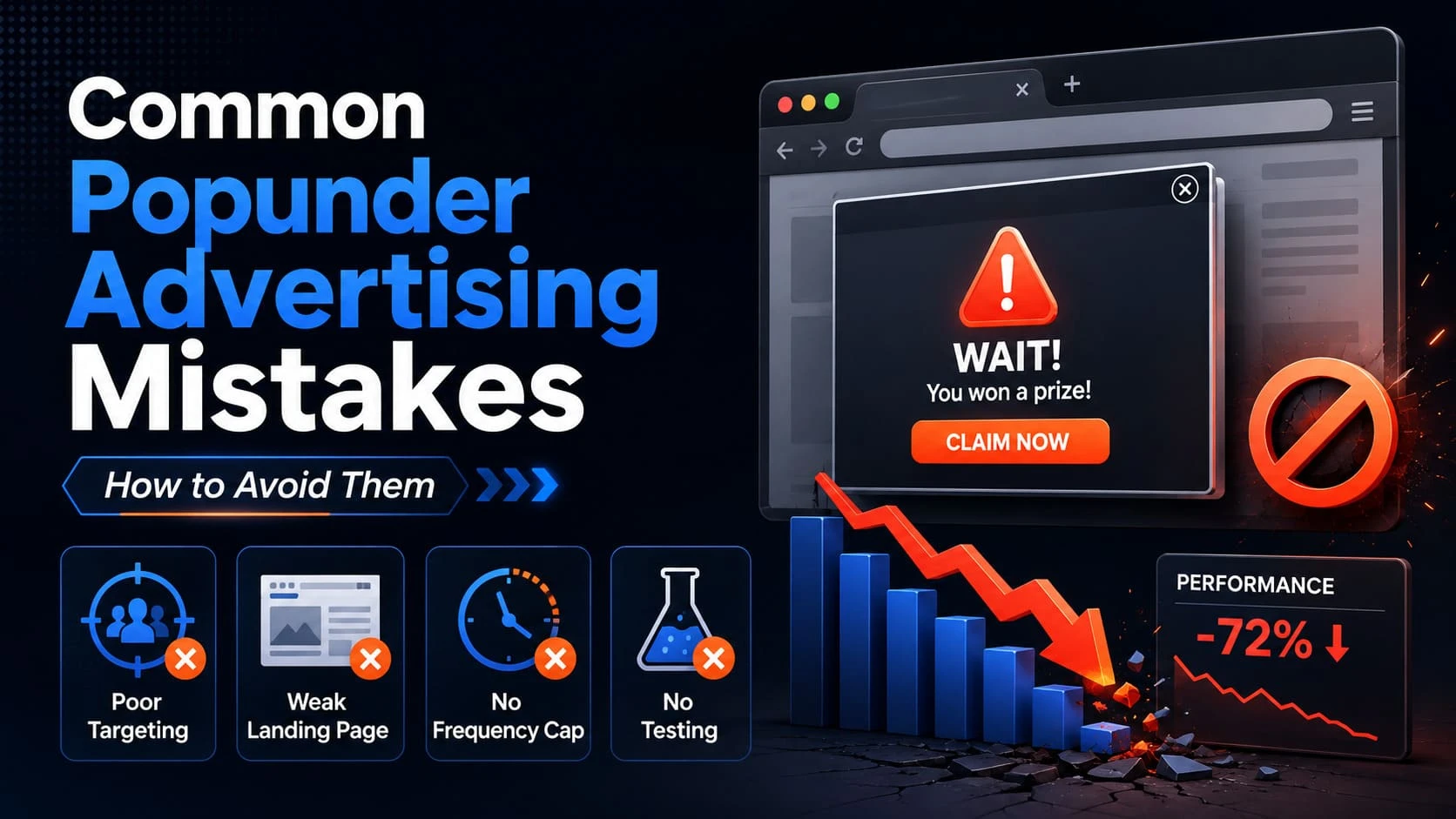
Here are the mistakes that most often destroy campaign performance—and what you should do instead.
Mistake #1: Choosing Popunder for the Wrong Offer
Not every product fits popunder traffic.
Many beginners try promoting expensive products, premium software, or services that require significant trust before a purchase.
Popunder visitors generally arrive without strong purchase intent. They were not actively searching for your offer.
Because of that, campaigns usually perform best when the desired action is simple.
Good examples include:
- app installs;
- software downloads;
- newsletter sign-ups;
- lead generation;
- sweepstakes;
- entertainment offers;
- utilities;
- selected affiliate products.
If your offer requires a 30-minute sales presentation before someone is ready to buy, popunder is probably not the ideal traffic source.
Mistake #2: Ignoring Landing Page Quality
Many advertisers assume traffic quality is the only variable.
It isn’t.
The landing page often determines whether a campaign becomes profitable.
Common problems include:
- slow loading times;
- confusing layouts;
- multiple competing buttons;
- unclear messaging;
- excessive text;
- poor mobile optimization.
Visitors decide within seconds whether they want to stay.
If they don’t immediately understand the value, they leave.
Keep landing pages simple.
One offer.
One message.
One action.
Mistake #3: Sending Everyone to the Same Funnel
Traffic is not identical.
Users from different countries, devices, and browsers behave differently.
Running one generic campaign for every audience usually wastes budget.
Instead, separate campaigns by:
- GEO;
- device type;
- operating system;
- browser;
- language.
Localized landing pages often outperform generic international versions because visitors immediately recognize familiar language, currency, and context.
Mistake #4: Scaling Before Finding a Winner
One profitable day does not mean a campaign is ready to scale.
Many advertisers double or triple budgets after seeing a handful of conversions.
Large budgets amplify both strengths and weaknesses.
Before scaling, ask:
- Is conversion data statistically significant?
- Are results consistent over several days?
- Are multiple traffic sources profitable?
- Is the landing page stable?
Scaling should be gradual, not emotional.
Mistake #5: Focusing Only on Cost Per Click
Popunder traffic is inexpensive compared to many advertising channels.
That doesn’t mean every cheap visitor is valuable.
Instead of asking:
“How cheap is the traffic?”
Ask:
“How much profit does each visitor generate?”
Campaign success depends on:
- Cost per acquisition
- Return on ad spend
- Earnings per click
- Revenue per visitor
The cheapest campaign isn’t always the most profitable one.
Mistake #6: Forgetting About Mobile Users
Today, mobile devices generate a large percentage of popunder traffic.
Yet many advertisers still design landing pages primarily for desktop.
Check your funnel on multiple devices.
Pay attention to:
- button size;
- page speed;
- font readability;
- scrolling experience;
- form usability.
A campaign that performs well on desktop may lose most of its conversions on smartphones.
Mistake #7: Poor Tracking Setup
Without tracking, optimization becomes impossible.
Many campaigns fail because advertisers don’t know:
- which publisher generated conversions;
- which browser performs best;
- which country loses money;
- which landing page converts better.
Reliable tracking allows you to:
- pause weak placements;
- increase bids on profitable traffic;
- identify winning audience segments.
Data—not assumptions—should guide every optimization decision.
Mistake #8: Ignoring Frequency
Showing the same landing page repeatedly to the same audience reduces effectiveness.
Users become familiar with the offer.
CTR decreases.
Conversions decline.
Frequency management helps reduce ad fatigue while maintaining campaign performance.
Refreshing creatives and landing pages regularly also keeps campaigns competitive.
Mistake #9: Expecting Immediate Profit
Popunder campaigns rarely become profitable within the first few hours.
Successful media buyers understand that testing is part of the investment.
Early campaign stages focus on collecting information:
- Which landing page works?
- Which GEO converts?
- Which devices perform best?
- Which placements lose money?
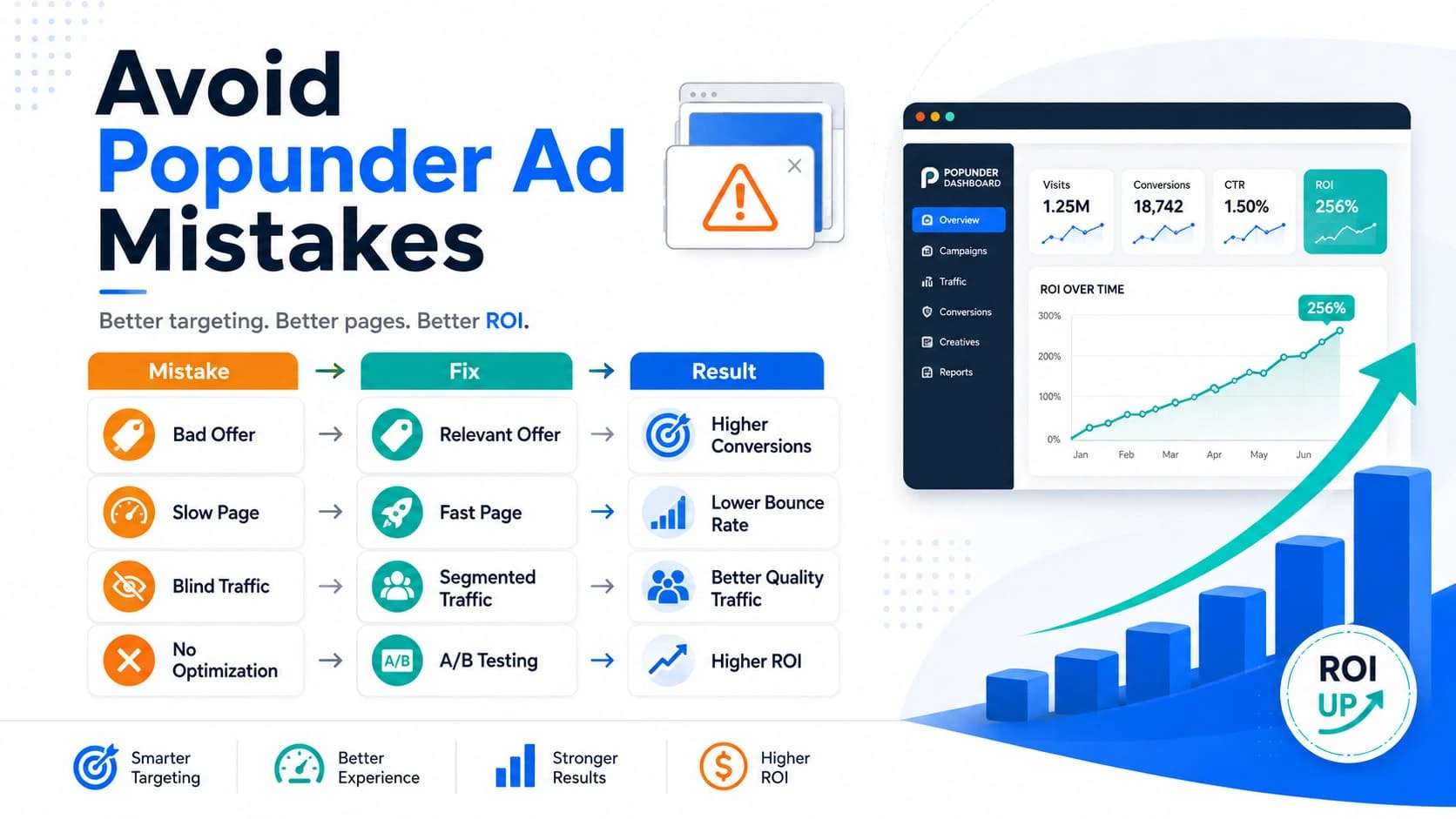
Optimization transforms raw traffic into profitable traffic.
Patience is often rewarded.
Mistake #10: Ignoring Publisher-Level Performance
Two publisher websites may generate identical traffic volumes but completely different ROI.
One placement may consistently produce conversions.
Another may produce nothing but bounce traffic.
Review publisher reports regularly.
Look for:
- conversion rate;
- cost per acquisition;
- session quality;
- revenue generated.
Successful campaigns often depend on excluding poor-performing placements rather than constantly increasing budgets.
Mistake #11: Using Weak Calls to Action
Many landing pages finish with vague messages like:
- Learn More
- Continue
- Click Here
These rarely communicate value.
Stronger calls to action explain exactly what happens next.
Examples include:
- Download Free
- Start Your Trial
- Compare Plans
- Get Instant Access
- Claim Your Bonus
Clarity usually converts better than creativity.
Mistake #12: Never Testing New Landing Pages
Even profitable campaigns eventually decline.
Audience fatigue increases.
Competition grows.
Advertisers copy successful funnels.
Testing new landing pages should become part of routine campaign management rather than an emergency response.
Sometimes changing only:
- the headline;
- hero image;
- button color;
- page layout;
- trust elements
can significantly improve overall performance.
Why Optimization Matters More Than Traffic Cost
Many people associate popunder advertising with cheap traffic.
Experienced affiliate marketers think differently.
They see popunder as a source of inexpensive testing opportunities.
The goal isn’t simply buying visitors.
The goal is buying data.
That data reveals:
- profitable countries;
- successful devices;
- high-performing placements;
- winning funnels.
Over time, optimization removes weak traffic and concentrates spending where returns are strongest.
That’s how inexpensive traffic becomes profitable traffic.
GTARO Ads and Performance Advertising
Modern advertising platforms have evolved far beyond simply delivering impressions.
GTARO Ads provides advertisers with access to high-performance formats, including popunder traffic, alongside native advertising, push campaigns, and smart monetization solutions.
This gives media buyers the flexibility to experiment with different acquisition strategies while using campaign data to optimize performance.
Instead of depending on one advertising format, marketers can compare results across multiple traffic sources and build campaigns based on measurable ROI rather than assumptions.
Final Thoughts
Popunder advertising remains one of the most cost-efficient traffic sources in performance marketing—but only when campaigns are managed correctly.
The biggest mistakes usually have little to do with the traffic itself.
They stem from:
- poor landing pages;
- weak tracking;
- unrealistic expectations;
- insufficient testing;
- premature scaling;
- lack of audience segmentation.
Avoiding these common problems can dramatically improve campaign performance.
For advertisers using platforms such as GTARO Ads, popunder traffic offers more than inexpensive visitors. It provides a scalable environment for testing ideas, refining funnels, and identifying profitable audience segments before expanding campaigns.
In performance marketing, success rarely comes from finding the cheapest traffic. It comes from building a system that turns affordable traffic into consistent, measurable profit.